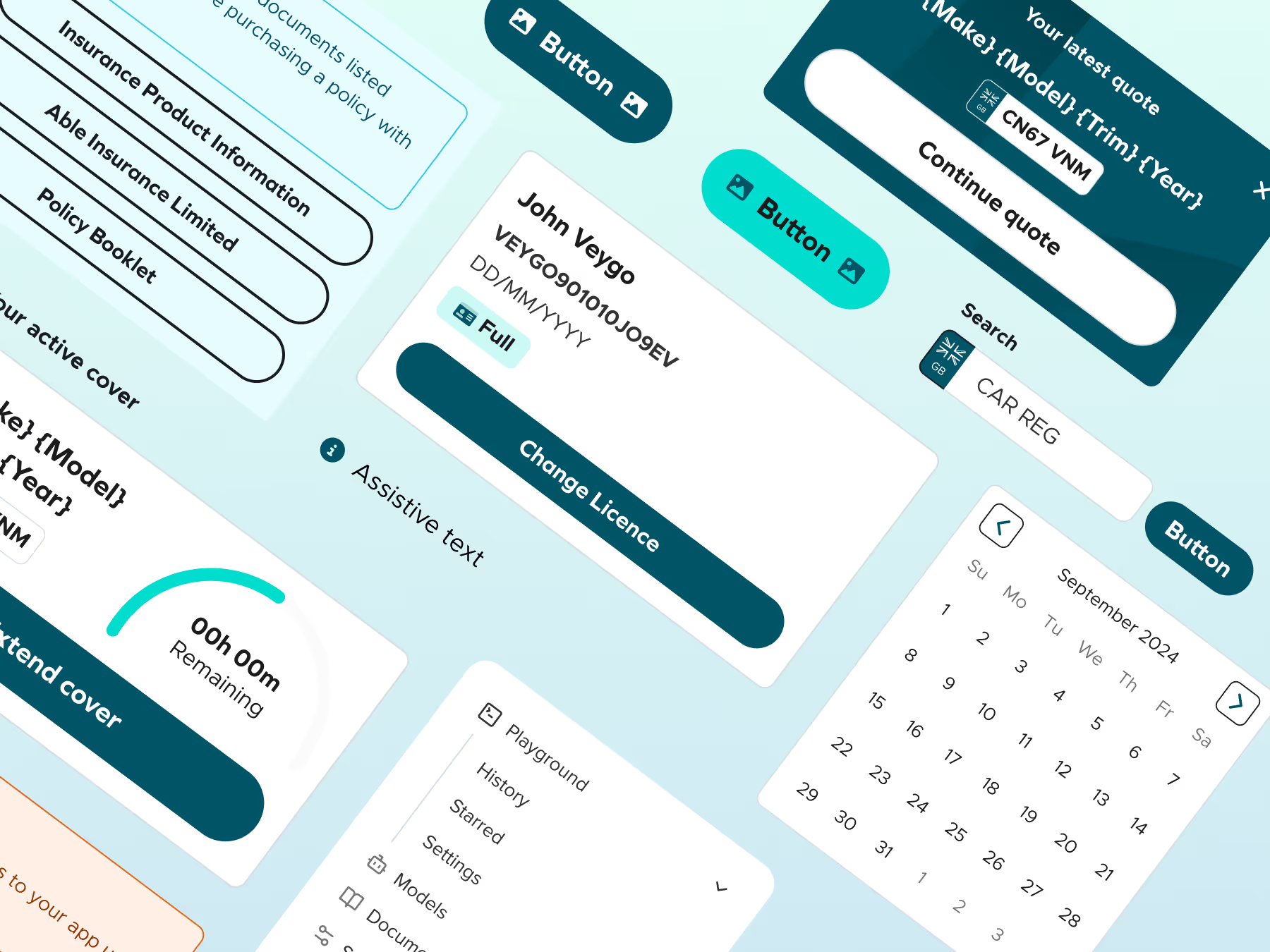
Launching CHASSIS: A Cross-Platform Design System
Impact
Delivery speed increased by 3x
Design complexity and maintenance significantly reduced
Unified components across all platforms
Standardised semantic tokens across iOS, Android, and Web
Simplified developer handoff through adoption of Figma Dev Mode
Raised overall UI quality and consistency
Problem
As the product scaled, the lack of a unified system created growing friction:
Components and patterns diverged across platforms
No shared source of truth for UI or behaviour
Inconsistent implementation between design and engineering
High maintenance cost and duplicated effort
Slower delivery due to rework and ambiguity
This made it difficult to scale the product and maintain quality across teams.
My role
I led the design and rollout of CHASSIS, working closely with engineering to ensure it was practical, adoptable, and built for real delivery.
Defined the system structure and principles
Partnered with engineers to align implementation across platforms
Upskilled developers on Figma Dev Mode to improve handoff
Drove adoption across teams and embedded it into delivery workflows
Alignment & Key Decisions
1. Start from an existing foundation to move fast
Used shadcn as a base
Reworked and extended it to meet product needs
This allowed us to deliver a complete system in 8 weeks without starting from scratch.
2. Unify components across platforms
Designed a shared component library for iOS, Android, and Web
Standardised behaviours, patterns, and structure
This removed ambiguity and reduced duplication across teams.
3. Standardise semantic tokens
Introduced a unified token system across platforms
Aligned design and engineering on naming and usage
This created consistency at both design and code levels.
4. Optimise for real delivery, not just design
Focused on making components easy to implement, not just visually consistent
Upskilled engineers on Figma Dev Mode
Improved handoff and reduced back-and-forth
This made the system usable in practice, not just in theory.
Outcome
Teams were able to ship features significantly faster
Design became easier to maintain and scale
Engineering gained clarity and consistency in implementation
The product experience became more cohesive across platforms
CHASSIS became a key enabler for scaling the product and improving delivery across teams.
Reflection
A design system only works if it improves how teams build, not just how things look.
By focusing on real delivery, cross-platform consistency, and strong collaboration with engineering, CHASSIS became a foundation for speed, not just standardisation.